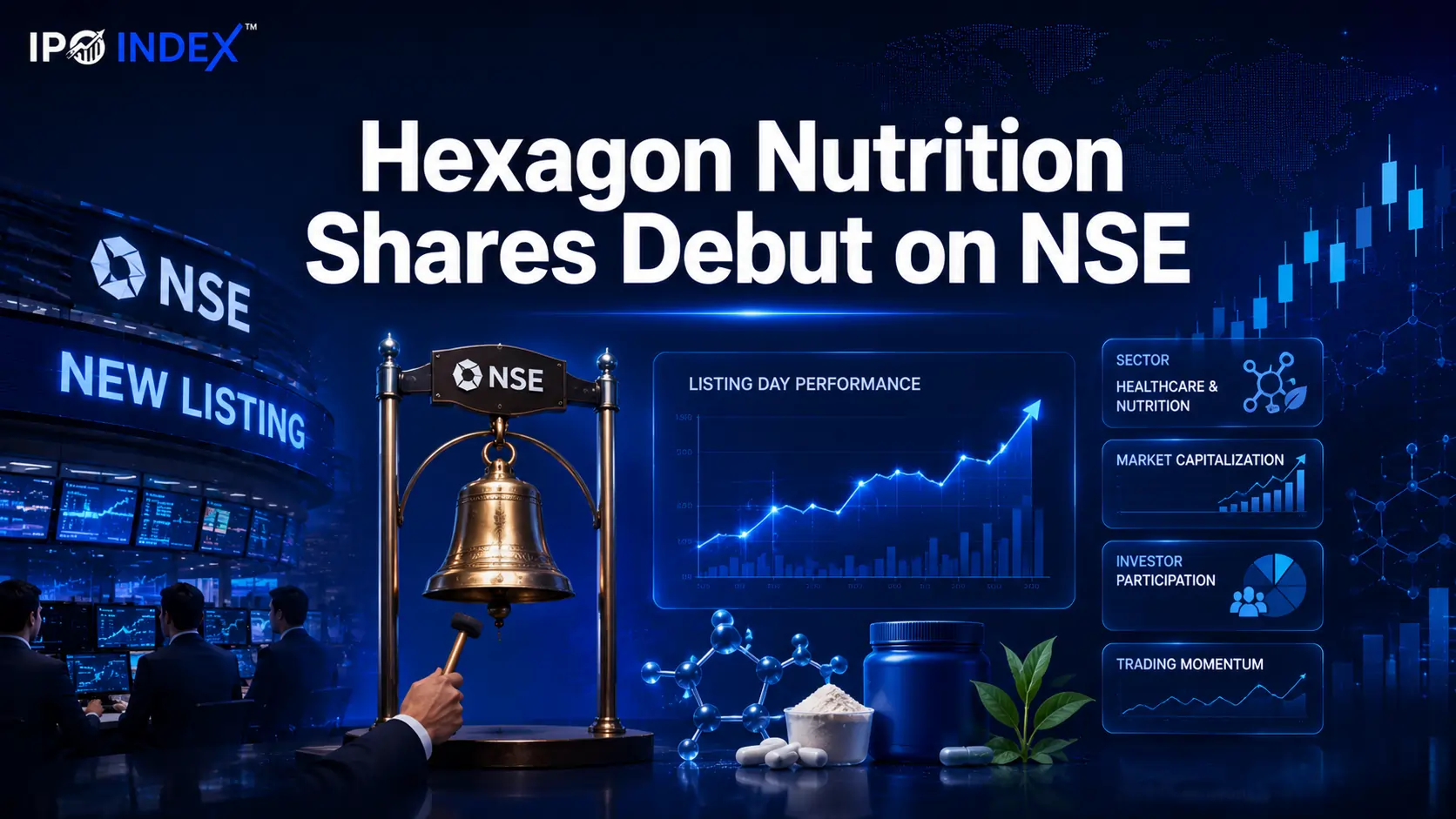
Hexagon Nutrition IPO shares started trading on the National Stock Exchange today. The stock opened at ₹48.25 per share. This opening price is 7.2% higher than the original IPO price. The company kept its fixed IPO price at ₹45 per share.
This is a very quiet and steady start for the company on the stock market. The total market value of the company stands at ₹593 crore on the first day of listing. This normal opening shows that stock market investors accept the business at this price. Investors are not expecting massive profits in the short term.
Hexagon Nutrition Valuation After Listing
Before the IPO came to the market, the price-to-earnings ratio of the company was 15.35x. Now the price-to-earnings ratio stands at 16.45x after the listing. This ratio shows how much money investors pay for every ₹1 that the company earns. The ratio increased only by a very small margin. This small change confirms that there is very low extra demand for the stock on day one. The current price of the stock looks fair and safe.
Other similar listed companies in the market have a much higher average price-to-earnings ratio of 67.54x. This average number is almost 4 times higher than the ratio of Hexagon Nutrition. This difference makes Hexagon Nutrition look much cheaper on paper. However, this big gap exists for valid reasons. Those big companies have very strong brands in the market. They also have huge distribution networks and long business tracks. Hexagon Nutrition is cheaper but it is not completely undervalued. The current stock price looks fair for investors. The company can grow its value if it improves profit margins in the future. The branded and therapeutic medicine sections must also grow continuously.
Key Business Risks for Investors
Investors must look at the major risks before they take any decision. Five big clients give around 30% of the total revenue to Hexagon Nutrition. This high dependence on a few customers is a big risk. The loss of even one big client will hurt the quarterly earnings of the company very badly.
The second major risk is about the IPO funds. This public issue was completely an Offer for Sale. The company did not get any new money from this IPO. All the old investors sold their shares. Hexagon Nutrition must use its internal cash for all future growth plans.
The third risk comes from foreign supply dependencies. The company buys 58.38% of its raw materials from China. It also depends on Malaysia and Singapore for raw materials. Any supply problems or price changes in these countries will reduce company profits quickly.
What Should Different Investors Do Now?
Short-term traders will not find this stock very exciting. The small 7.2% listing profit leaves very little room for quick income.
Medium-term investors who like the wellness sector can watch this stock closely. They must track the company performance for the next two or three quarters. They should check if the company improves its profit margins.
Long-term investors who can take small-cap stock risks can think about this company. Hexagon Nutrition has a 16.45x price-to-earnings ratio and a 17.1% return on capital employed. The company is also making better profits now. These investors need great patience for short-term price movements.
Conservative investors must wait for some time. They should check the next one or two quarterly results before they buy shares. This wait will help them see if the client dependence and raw material risks reduce.
Important Things to Track in Future
Final Review
The stock market listing of Hexagon Nutrition shows a very calm picture. Buyers did not run behind the stock and they did not reject it either. This steady reaction shows that the business has a fair price. There is no major reason for a big price jump in the near term.
The gap between this company and big peers is the most interesting part for the long term. Hexagon Nutrition has a 16.45x price-to-earnings ratio while peers sit at 67.54x. The company can get a better valuation if it performs well continuously. Investors must believe in the long-term execution capacity of the management for the next two to three years.
Disclaimer: This article is only for information purposes and it does not give any buy or sell advice. Please talk to a certified financial advisor before you invest your real money in the stock market.















No comments yet. Be the first to share your thoughts!